Zentangle Terminology Explained: A Beginner's Guide
If you're new to The Zentangle® Method, you'll almost certainly have come across some new phrases and terminology that are unique to this mindful drawing art form.
To help you get familiar with the method, I’ve compiled this glossary of key Zentangle® terms.
Aura
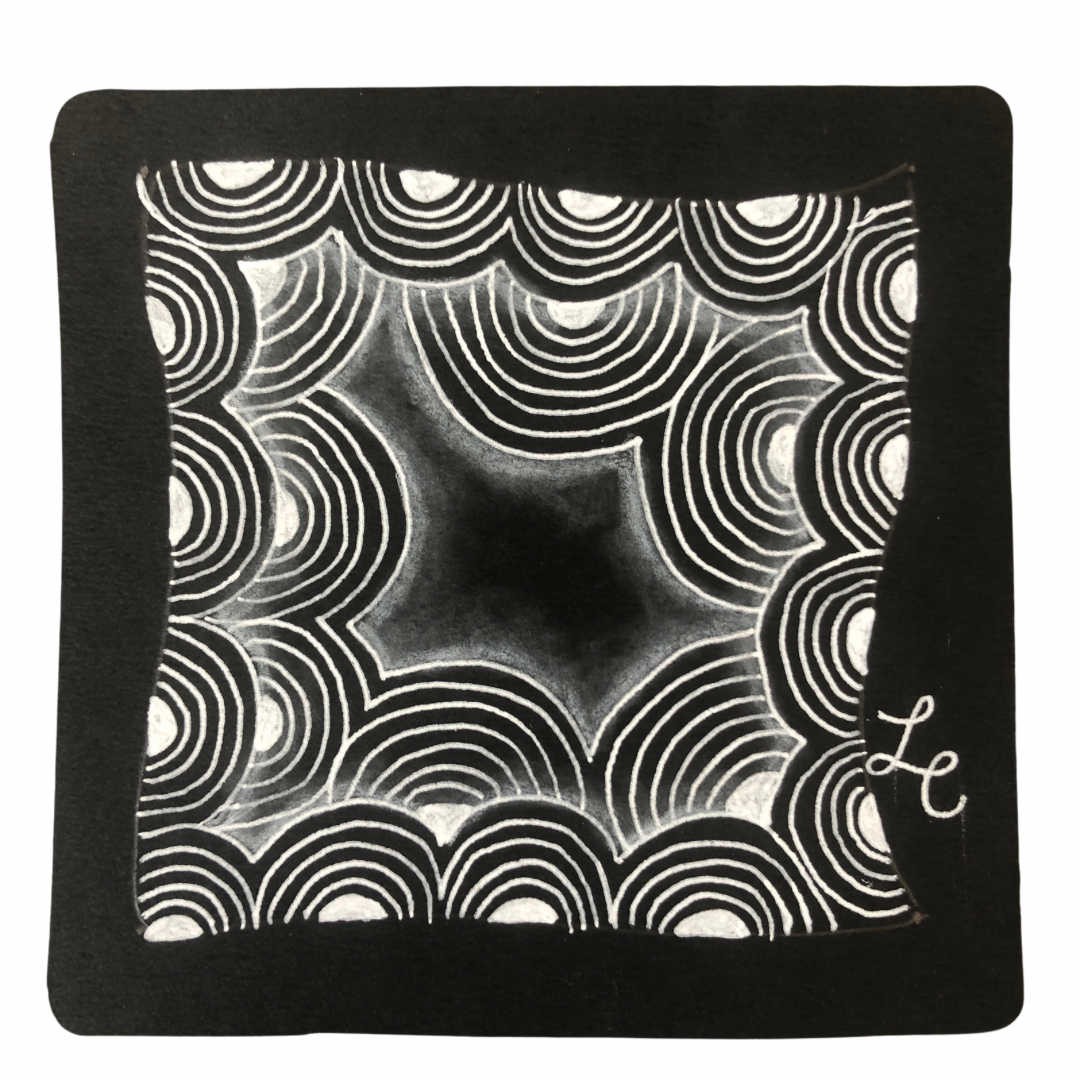
A technique where you create a close, echoing outline around a shape or pattern you have already drawn. Crescent Moon is often one of the first tangles taught to people because it demonstrates the technique of aura so effectively.
Bijou
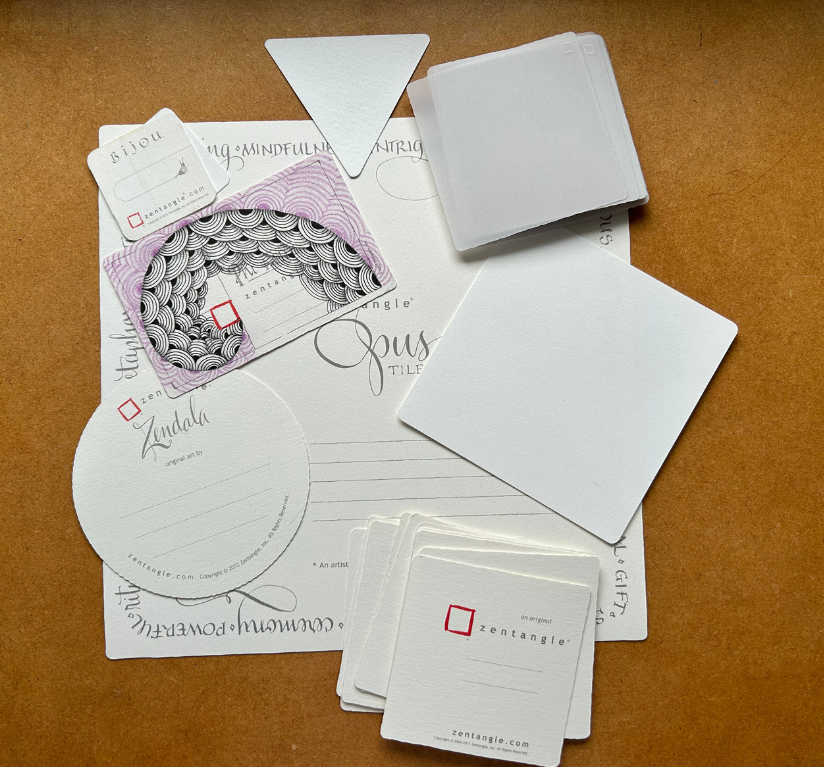
A tiny 2-inch Zentangle tile, named after a small snail mascot created by the Zentangle founders to encourage slowing down and enjoying the process.
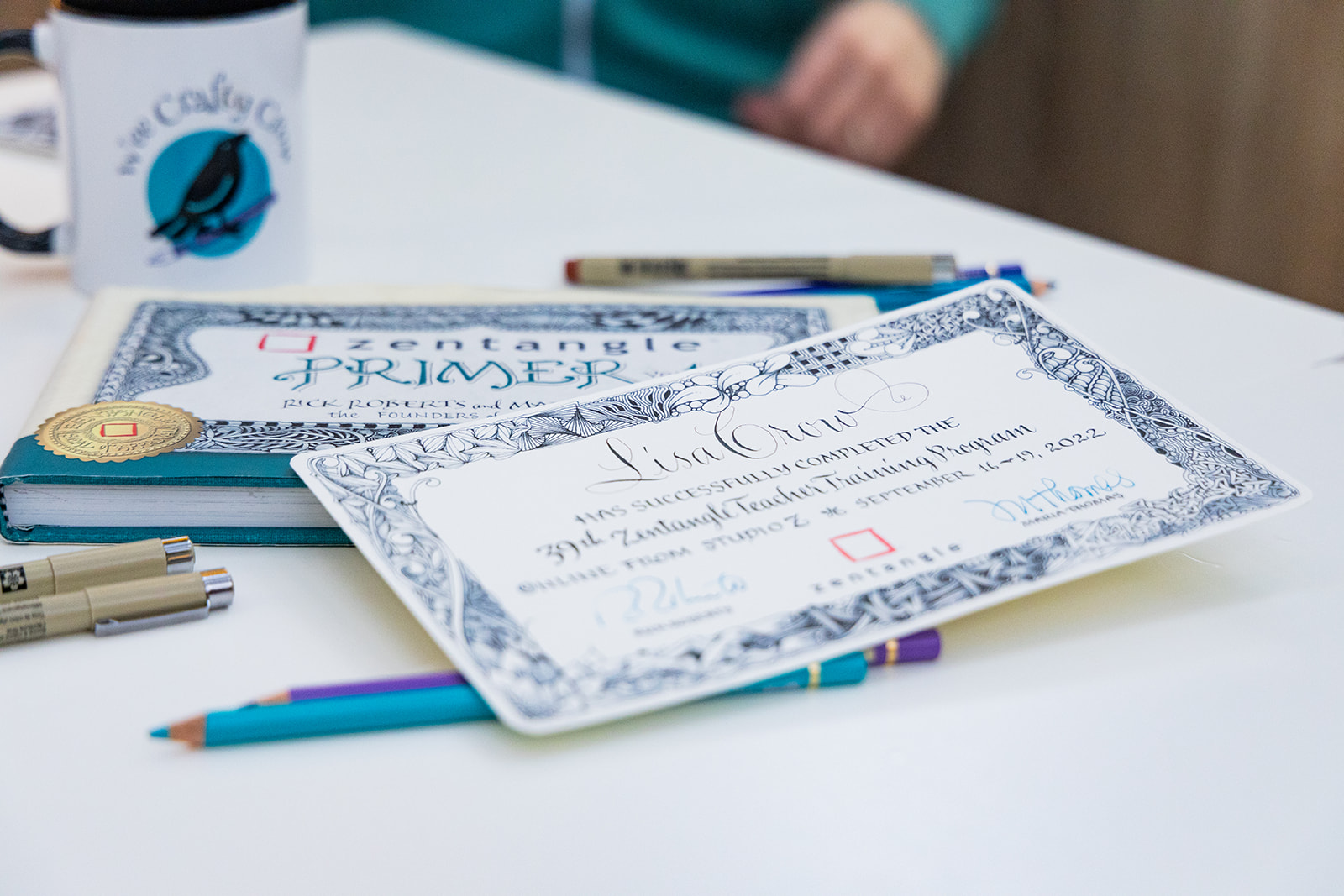
Certified Zentangle Teacher (CZT™)
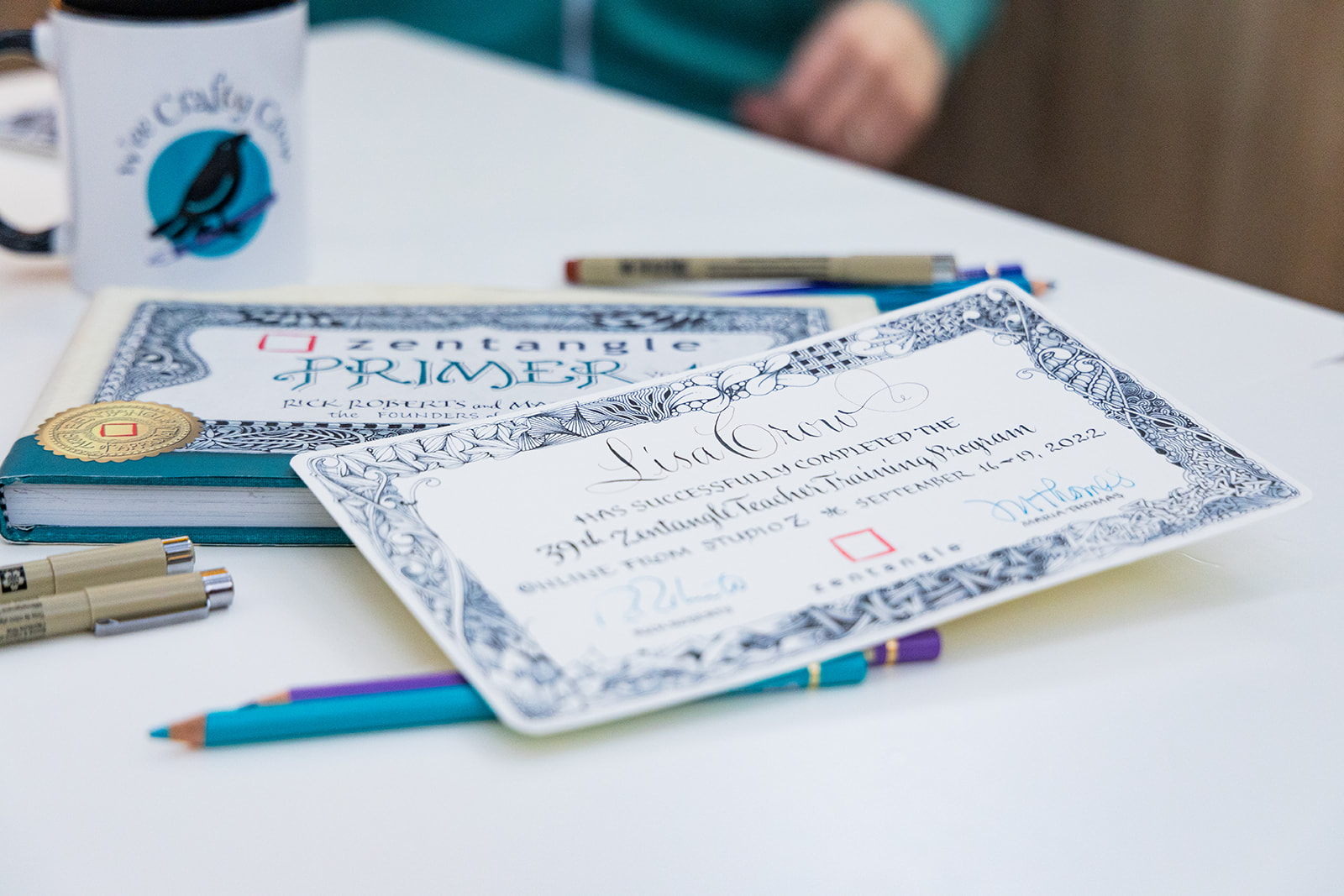
A Certified Zentangle Teacher (CZT™) is someone who has attended a CZT seminar and been certified by Rick Roberts and Maria Thomas. CZTs are qualified to teach The Zentangle Method and can purchase Zentangle products at wholesale prices.
Deconstruct
To break down a tangle into its most basic steps so that a tangler can recreate it easily.
Embellishment or Enhancement
Elements added to a tangle, such as dots, sparkles, rounding, or additional linework, to enhance its appearance.
Hatching and Cross-Hatching
Shading techniques using closely spaced parallel and intersecting lines to add dimension to a Zentangle drawing.
A fun technique to play with
Hollibaugh Fashion and Drawing Behind
Drawing in "Hollibaugh fashion" refers to the tangle Hollibaugh, where you layer lines and shapes in a way that creates the illusion of depth, where some elements appear to weave over and under others. This is achieved by deliberately drawing one set of lines first.
When you are creating subsequent lines, you stop at previously drawn lines and start drawing again as soon as that shape has ended. The result is a woven effect, making the design look more dimensional. Hollibaugh fashion is also referred to as "drawing behind".
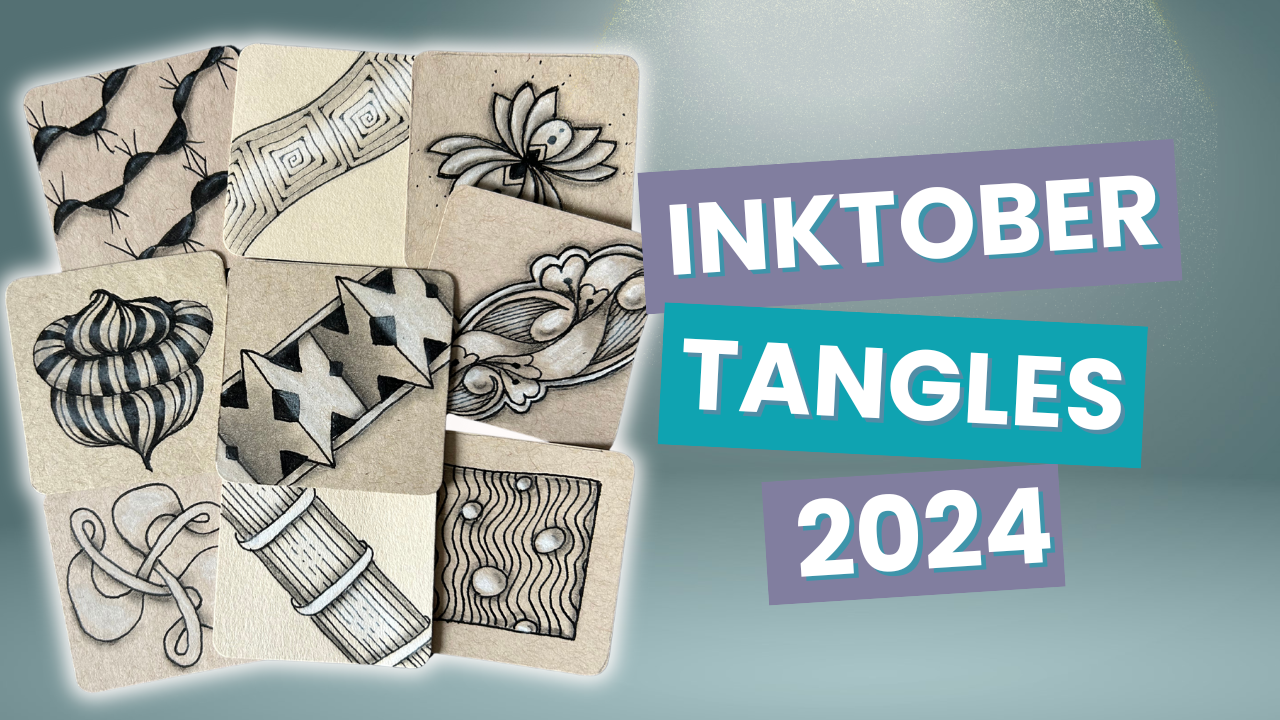
Inktober Tangles
Inspired by the general art challenge for October created by Jake Parker in 2009. Inktober Tangles assigns a different tangle to each day of October, encouraging artists to create daily.
Legend
A decision-making tool used when choosing which tangle to draw next. A common example includes a list of 20 tangles paired with a 20-sided die, allowing artists to roll the die and follow the assigned pattern.
Map Tangling
A technique where you use coffee spills, watercolour splashes or ink stains to create a stain on your tangling surface, map tangling is a fun technique to play with. The idea from that point is that once you're stain has dried you tangle on that and only that, not drawing on any of the uninked surfaces.
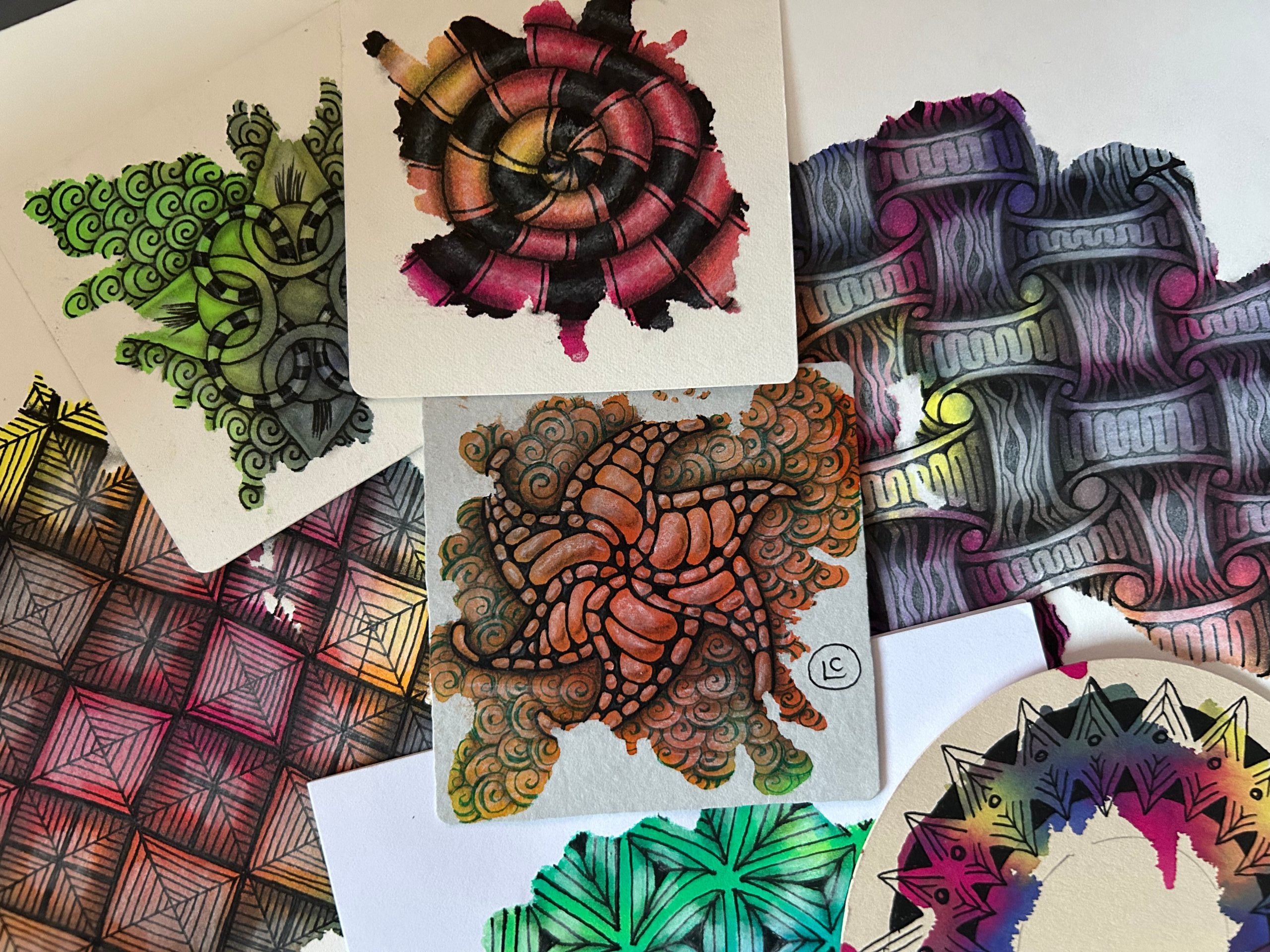
Mosaic
A collection of completed Zentangle tiles displayed together at the end of a class, showcasing the unique interpretations of different artists working with the same guidance.
No Mistakes
A core Zentangle philosophy that encourages artists to embrace unexpected marks as opportunities rather than errors. Zentangle kits do not include erasers, as in both art and life, adapting to challenges leads to creativity and growth.
Opus Tile
A significantly larger Zentangle tile, measuring nine times the size of a standard tile.
Project Pack
A themed Zentangle challenge. Zentangle releases a couple of Project Packs each year, with free accompanying videos on their YouTube channel. Official supply kits can be purchased, but participants can also use materials they have at home.
Reticula and Fragments
A technique for creating patterns by repeating smaller fragments within a structured grid (reticula), allowing for endless variations and unique results. Zentangle Inc published a book on the topic.
Tangles are abstract and non-representational
Step-Outs
Illustrated step-by-step instructions that break down how to draw a tangle, one stroke at a time.
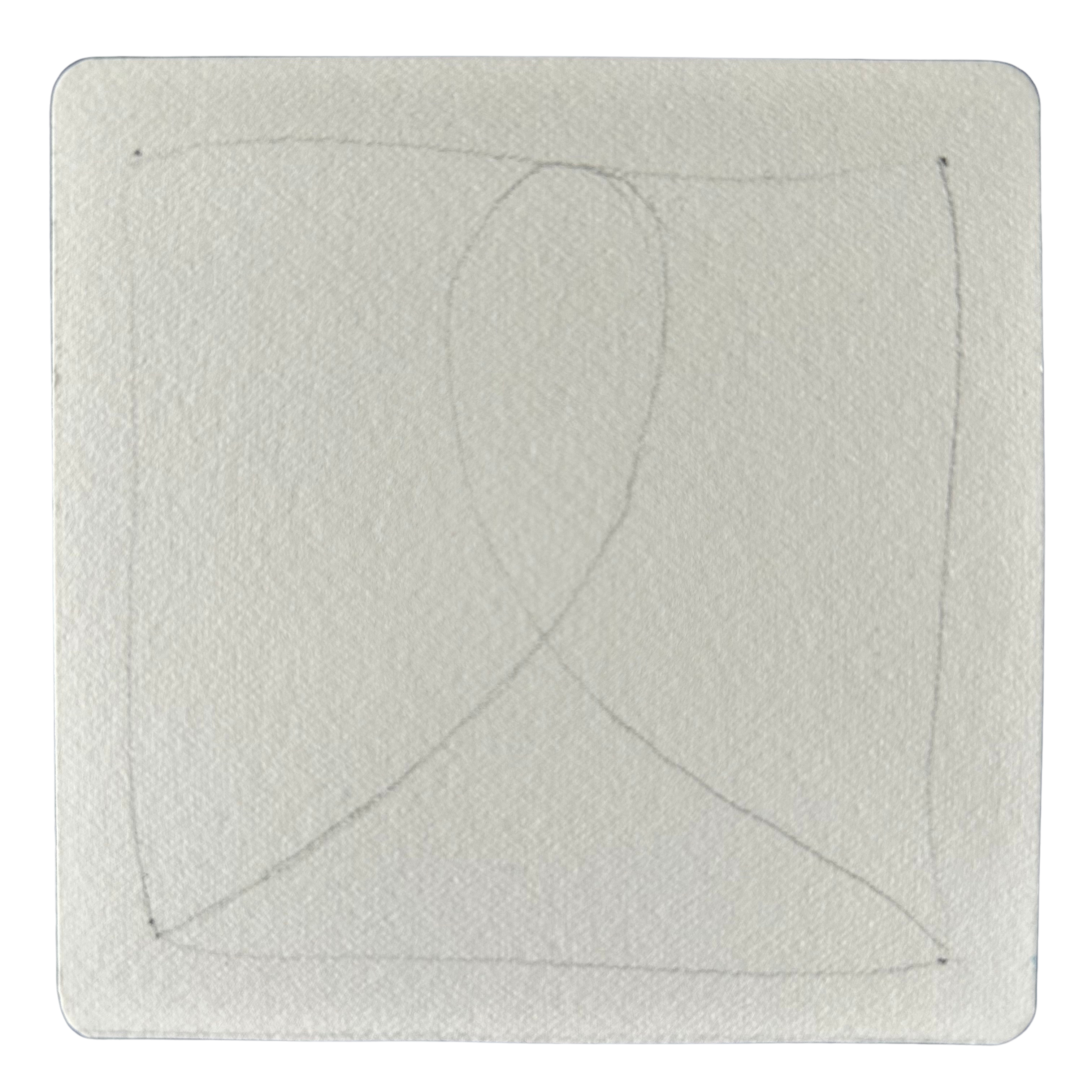
String
A light pencil guideline drawn on a tile to divide the space into sections. The string helps organise tangles but disappears into the final design as it is covered with ink.
Tangle
A repeated pattern that forms part of a Zentangle composition. Tangles are abstract and non-representational, allowing creativity to flow. Basically, while all tangles are patterns, not all patterns are suitable as tangles, as some do not lend themselves to easy deconstruction.
Tangleation
A variation of an existing tangle, where elements of the pattern are changed or combined with others to create something new. In other words, basic tangles are like paint straight from a tube, whereas tangleations are the artistic result of mixing or altering them.
Zentangle is designed to be relaxing and accessible to everyone
Tile
A small, high-quality paper canvas used for Zentangle drawings. The standard tile size is 3.5 inches by 3.5 inches, but other sizes and shapes exist, including:
Apprentice Tiles (4.5 inches)
Bijou Tiles (2 inches)
Zendala Tiles (4 5/8 inches, circular). Worth noting these are different from mandalas, which are a separate practice altogether.
Translucen-Z Tiles (semi-transparent)
Opus Tiles (nine times the size of a classic tile) Tiles are available in white, black, tan, grey, and Translucen-Z paper.
Zentangle
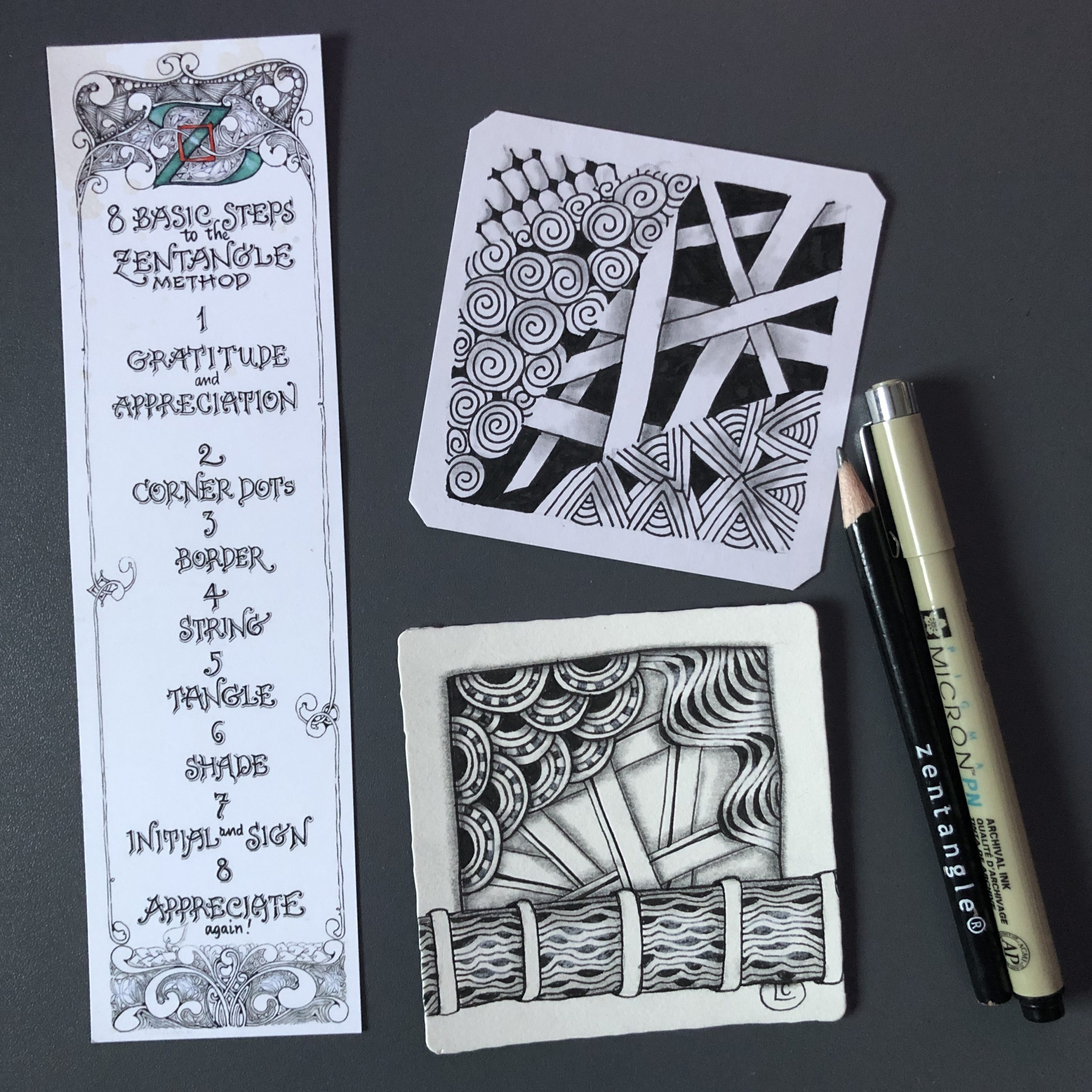
A mindful drawing method that uses structured, repetitive patterns to create beautiful, abstract artwork. Zentangle is designed to be relaxing and accessible to everyone, regardless of artistic experience. It is suitable for absolute beginners from around the age of seven and up.
The Zentangle Method is based on eight key steps
Zentangle Inspired Art (ZIA)
Artwork that incorporates Zentangle patterns but expands beyond the standard tile format, often used in mixed media, large-scale designs, or personalised projects. Unlike traditional Zentangle, which uses only black ink on white tiles, ZIA can incorporate colour and paints.
Zentangle Method
Zentangle Method The foundational approach to Zentangle, based on eight key steps you can work through here:
Gratitude & Appreciation
Corner Dots
Border
String
Tangle
Shade
Initial & Sign
Appreciate
Zentomology™
Zentangle Inc.’s playful approach to classifying tangles. The term is a wordplay on "entomology," the study of insects.
Final Thoughts
Learning Zentangle terminology helps you connect with the practice and the community, making your creative experience even more enjoyable. So, if you're feeling inspired, grab your supplies, pick a few tangles, and start creating! The beauty of Zentangle is in the journey, not just the result.
Are there any words you’ve come across that I’ve missed? Let me know!
If you'd like to keep notified about my upcoming classes and products, join my mailing list. You'll get a FREE ebook as my way of saying thank you for joining.


