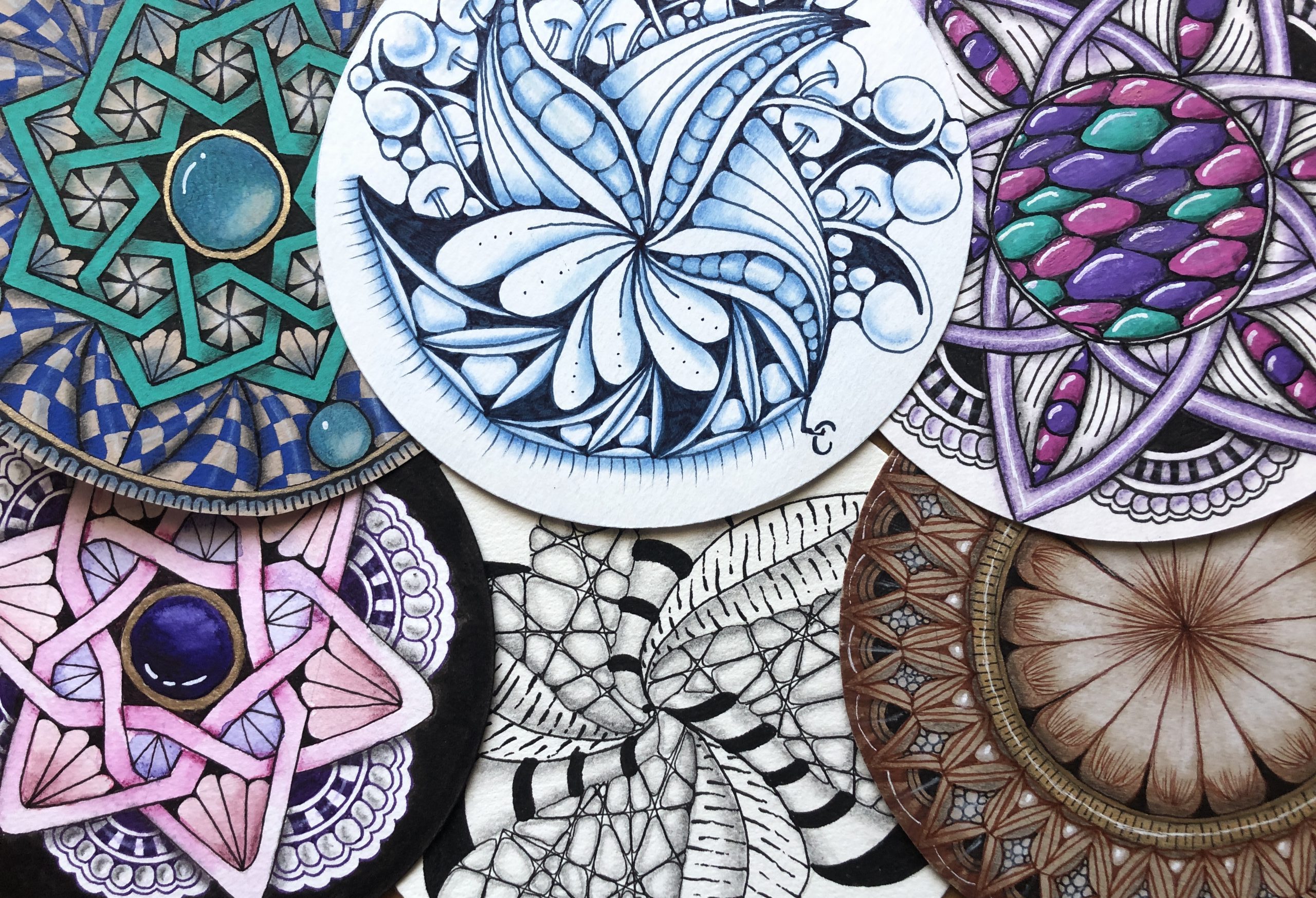
From Blank Page to Beautiful Pattern
There is something about a blank piece of paper that can stop you in your tracks.
Even if you already love drawing or painting, that empty white space can feel oddly intimidating. All those possibilities, and none of them feel quite right. What if you start in the wrong place, or if it ends up looking rubbish? What if you waste it?
So the paper stays blank. The idea stays in your head. Nothing gets made.
I have been there - I know that feeling very well. But what I have learned through years of practising The Zentangle® Method is that the blank page does not have to be scary. In fact, when you approach it the Zentangle way, that blank space becomes full of possibility and you can feel excited to get started, rather than apprehensive to begin.
Why the blank page feels so daunting
The blank page problem is not really about the page at all. It's a mindset thing.
Most of us have been conditioned to believe that art requires talent, training or some innate gift we either have or we don't. When we sit down to create something from nothing, we have all of those thoughts in our head. And suddenly what was supposed to be enjoyable starts to feel like a test we haven't revised for.
The pressure to get it right from the very first mark is huge, and it is entirely self-imposed.
No one else is watching or grading us. But we hold ourselves to standards that even professional artists do not apply to themselves.
Add to that the physical reality of a blank piece of paper. Where do you start? The top left? The middle? Do you sketch something out first? What if the proportions are off? Before we've even made a single mark, we have already imagined every possible way it could go wrong.
So we freeze or we abandon the idea entirely. And we tell ourselves we're just not creative.
But that's not true. You are creative. You just haven't found the right framework. Yet. Enter The Zentangle® Method.
What The Zentangle® Method does differently
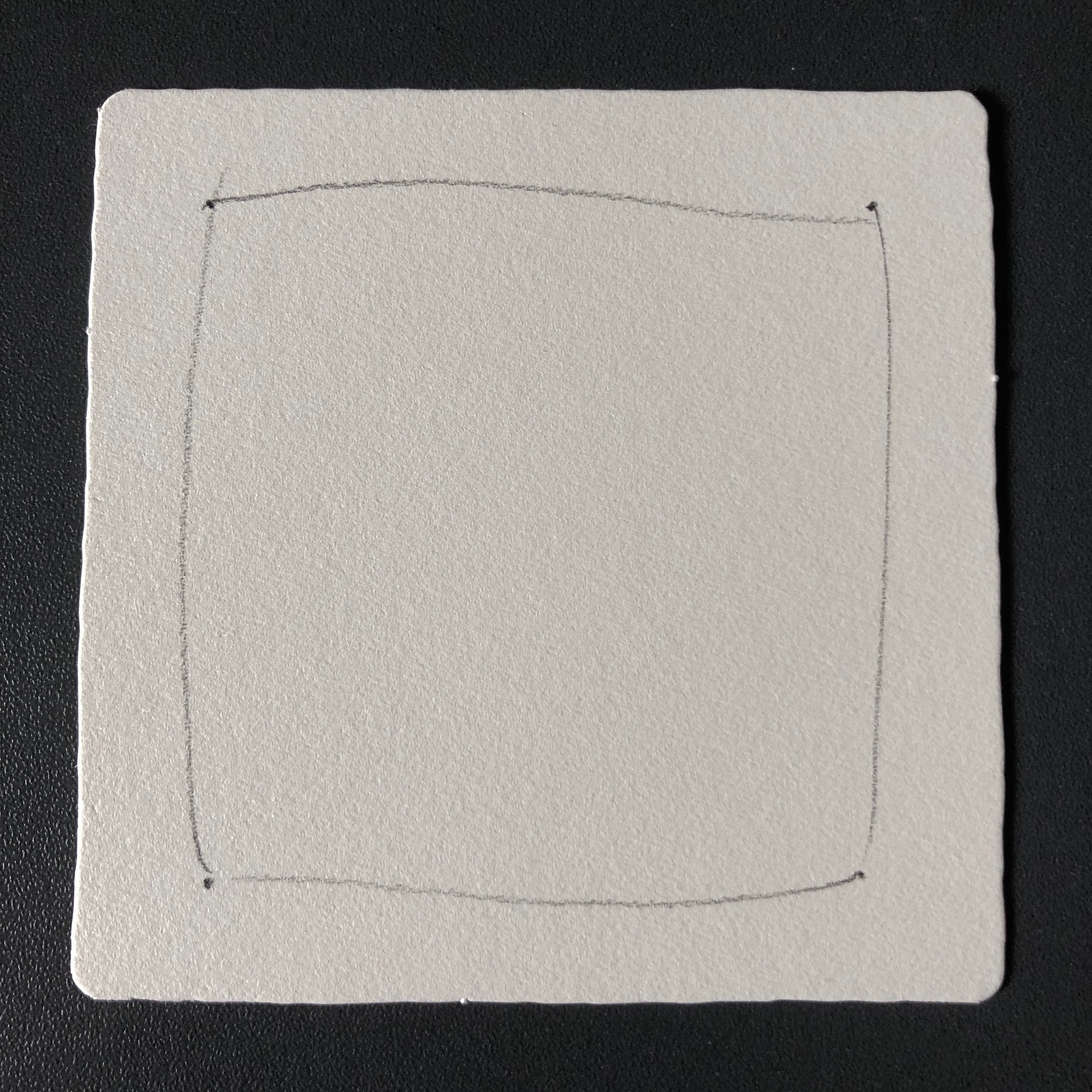
The Zentangle® Method is a lot of things, but above all it is structured. And that structure is the antidote to the blank page.
Here is how it works in practice.
When you sit down to create a Zentangle tile, you start with a border. You draw a light pencil line around the edge of your small square tile, and suddenly that endless white space has a frame. It's no longer blank and overwhelming, it's a contained little space with edges you can work within.
Next comes the string. This is a light, flowing pencil line (or a few lines) that divides the tile into sections. It doesn't have to be precise or look like anything in particular. It's just a way of breaking that space into smaller pieces, each of which you will fill with a pattern.
And then you choose a tangle. One pattern, built one stroke at a time.
Each tangle has step-by-step instructions. You're not expected to improvise or invent from nothing. You follow the steps and the pattern emerges. Then you do the next one. And the next. Stroke by stroke, the blank tile fills up. And at the end of it, you have something genuinely beautiful.
There's no planning required. There's no finished image to aim for. You just trust the process and enjoy putting pen to paper.
One stroke at a time
One of my favourite Zentangle philosophies is "anything is possible, one stroke at a time". It sounds simple, almost too simple, but I have thought about it a lot over the years.
A lot of creative projects fail before they start because we're trying to hold the whole thing in our head at once. We think about the finished piece before we have made a single mark. And it feels impossible, because at that stage it is.
But one stroke? One stroke is always possible.
When I'm tangling, I'm not thinking about the completed tile. I'm only thinking about the single line I'm drawing in that moment. That's all. Because I am fully focused on that one mark, I'm not anxious about the rest of it. I'm not worried about whether the whole thing will look good in the end. I'm just there, in that moment, making that mark.
That's where the mindfulness element of Zentangle comes from. It's not a separate thing you add on top of the process, it's built into the method itself. The act of slowing down and focusing on one stroke at a time is meditative in its own right. If you would like to read more about the wellbeing benefits, I have written about them in this post here.
Stroke by stroke, the pattern builds and, before you know it, you're done, and you've made something beautiful without ever feeling overwhelmed.
A closer look at the tangles themselves
This is the part that surprises people most when they try Zentangle for the first time. The individual tangle patterns look intricate on a finished tile, really quite impressive. And then you see the step-by-step breakdown and realise each one is just a series of very simple shapes.
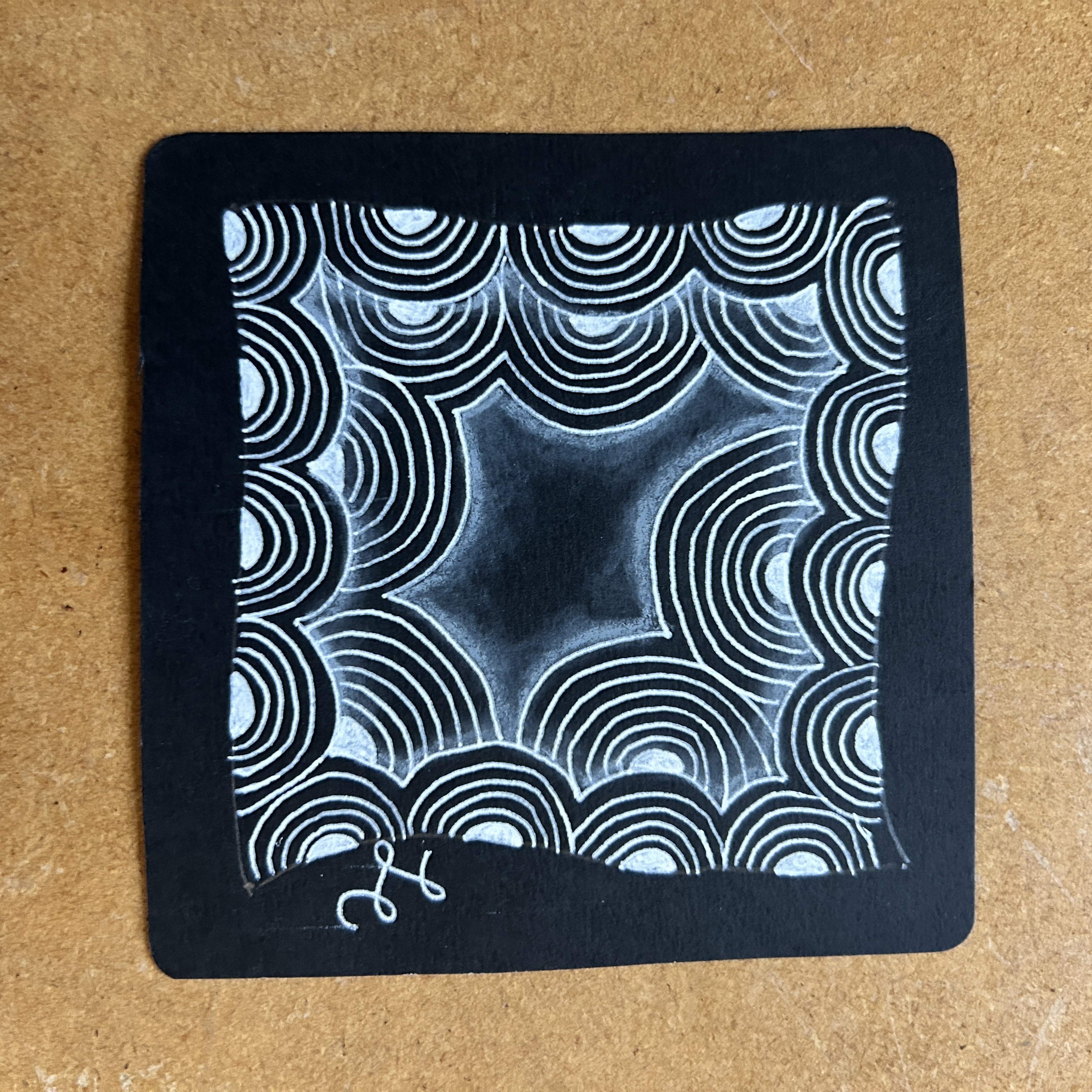
Take Crescent Moon, one of the official tangles from Zentangle HQ. It is made of a series of curved lines nested inside each other, with some filled sections for contrast. Written out like that it sounds almost boring. But put it on a tile alongside a few others and it becomes part of something genuinely lovely.
Or Hollibaugh, which is simply a set of overlapping bars, shaded to create depth. It looks complex, yet the steps are straightforward.
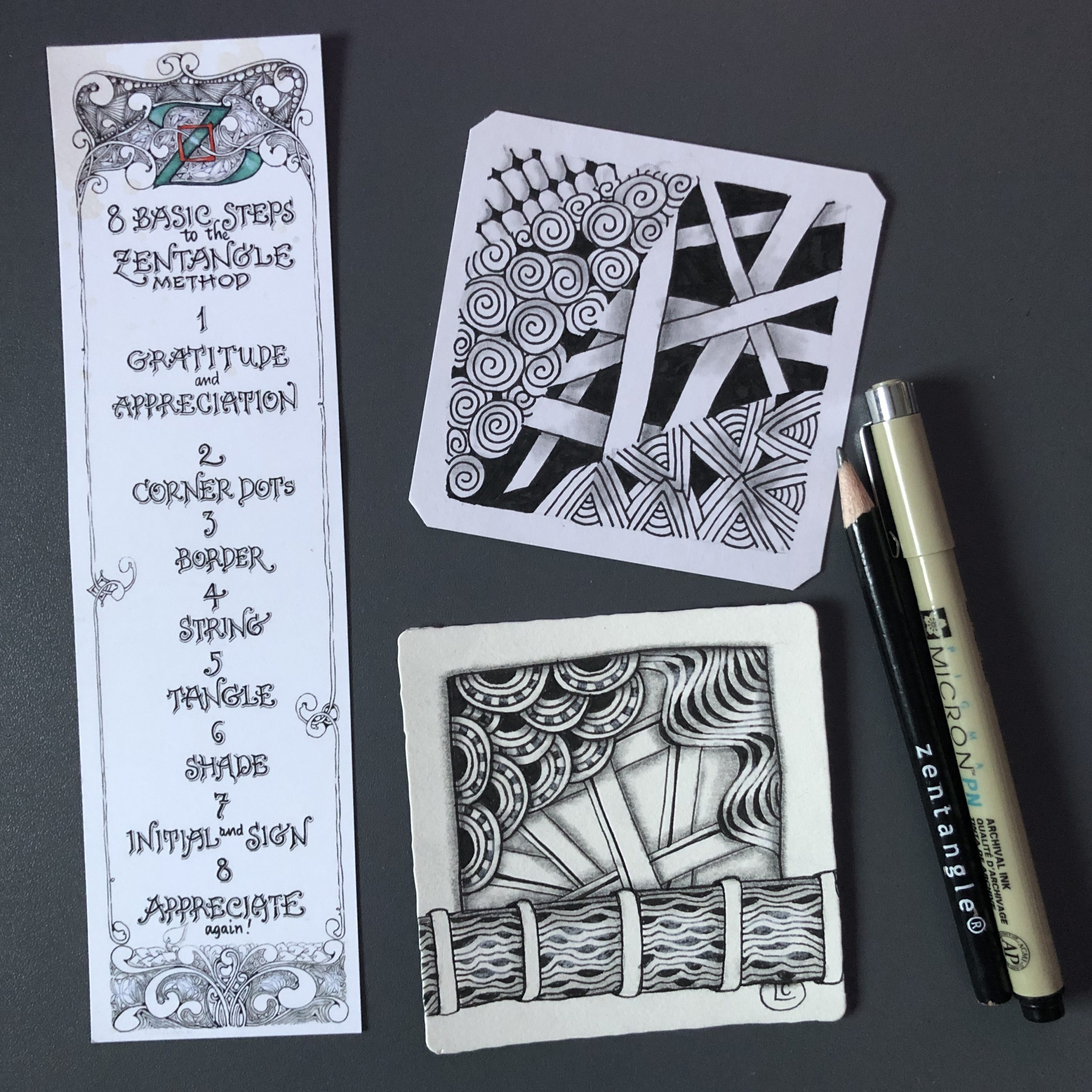
Aura-ing - drawing a line that follows the contour of a shape just inside or outside it - is another technique that takes seconds to learn and transforms any tile.
None of these require artistic talent. They require patience, a decent pen and a willingness to follow the steps. That's it.
There are hundreds of official tangles to explore, and you'll naturally find favourites. Some will feel easy and satisfying from the first attempt. Others will take a little practice. But even the ones that challenge you will look better on a tile than you expect.
The no-mistakes philosophy
This is the part of Zentangle that genuinely changed how I approach drawing.
In Zentangle, there are no mistakes. If you make an unintended mark, you don't panic and reach for an eraser - tiles are drawn in ink for exactly this reason. You look at that mark and ask yourself how to work with it. How can it become part of the pattern? What does it suggest?
This is such a different way of thinking from the perfectionism that most of us bring to creative work.
I spent the better part of two decades as a journalist and sub-editor, and I now do freelance newspaper shifts. Professionally, being paid to spot mistakes does something to you. That pedant transferred very easily to my art practice, and for a long time it meant abandoned projects and crumpled paper.
The Zentangle Method is the thing that changed that, on the tile at least.
Zentangle taught me that an unintended mark is not the end of a piece: it is just another chance to be creative. I have made marks I did not plan that became my favourite part of a tile. I have gone 'wrong' and ended up with something better.
Realising that a flaw could become a feature was a genuine revelation.
And once that mindset shift starts to happen on the tile, it works its way into other areas of your life. Instead of throwing 'ruined' art in the bin, I make changes to it and tweak it. That's not a small thing.
You do not need to be good at art
Believe me when I say that Zentangle is not about whether you can draw.
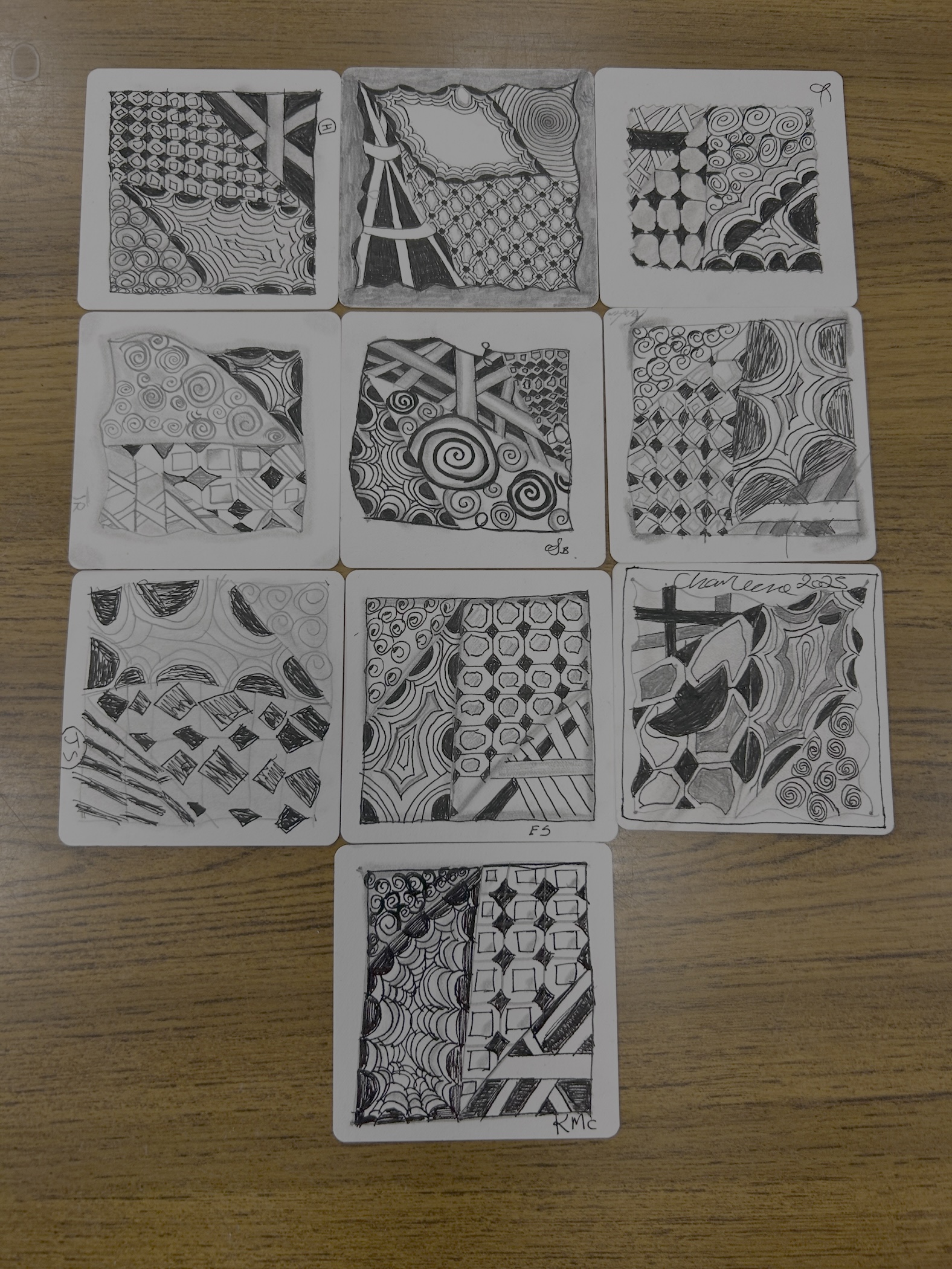
That might sound strange coming from a method that produces art. But Zentangle is not about drawing a cat or a landscape or a likeness of anything. It's about you following a series of steps, to make a line here, a curve there, a dot in the corner. Anyone can do that.
The patterns look complex when you see a finished tile, even to a Zentangle teacher. When you break them down into their individual steps, though, each one is completely manageable. A series of small, simple strokes becomes something intricate and impressive, and you did not need any innate artistic ability to make it happen.
I have seen this with my own students. People who arrive saying they cannot draw to save their lives leave with a tile they are genuinely proud of. Not because they developed a new skill in one session, but because The Zentangle Method is designed to produce something beautiful through process rather than talent.
What it actually feels like to sit down and try
The first time I sat down with a Zentangle tile and followed the process properly, I was surprised by how calm I felt almost immediately.
There was not that usual internal chatter where my brain was critiquing every mark. It was just me and the pen and each new stroke building on the last.
By the time I finished, I had lost the better part of an hour. It had not felt like an hour, and I had a tile in front of me that I was genuinely pleased with.
That was the moment I understood what people mean when they talk about a creative flow state. I had read about it but had never quite felt it before. Zentangle got me there on the first try.
I'm not telling you this to oversell it, I'm telling you because I think a lot of people reading this are in exactly the position I was in - looking at a blank sheet of paper and feeling stuck.
Getting started
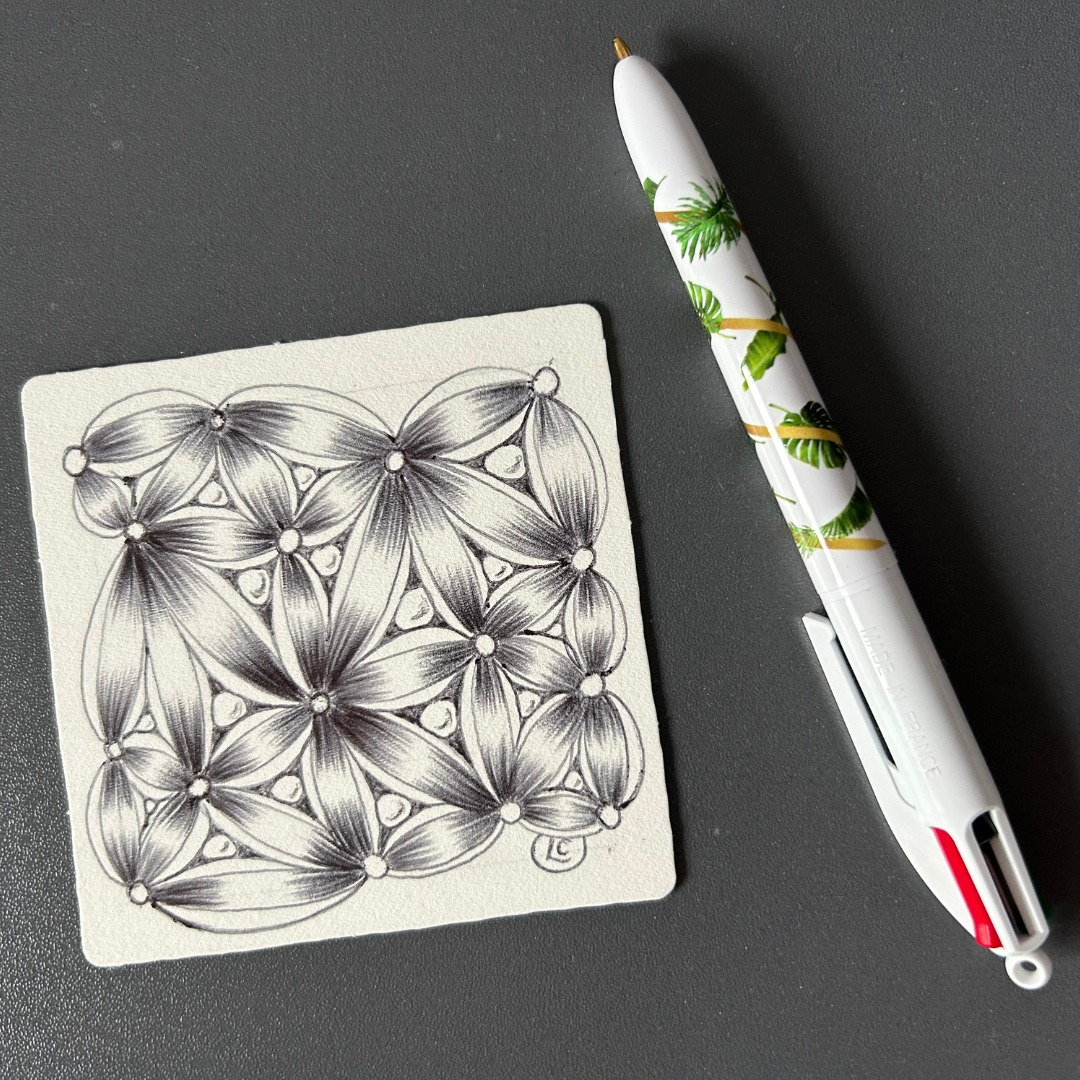
If you are curious but not sure where to begin, the good news is that you really do not need much.
A black fineliner pen, a pencil, and a piece of paper. That is genuinely it. No expensive supplies nor a dedicated studio space. You can tangle at the kitchen table, in a coffee shop, or curled up on the sofa - wherever you have a few quiet minutes.
If you would like more detail on supplies, I have written about the basics of what you need before. It really doesn't have to cost much to get started.
The real starting point, though, is just picking up the pen and making that first mark. The border. A simple rectangle around the edge of your paper.
You have already made something. And you have not got it wrong.
From there, it really does just build - stroke by stroke, until a blank page has become something entirely different. Something beautiful that you made.
Ready to take it further?
If this has sparked something for you, there are a few ways to explore more.
The easiest starting point is simply to try a tangle or two and see how you get on. You can find step-by-step guides all over the Zentangle website and my YouTube channel if you want a visual walkthrough.
If you would like a proper structured introduction to the method, my beginner's online course takes you through everything step by step, and you will leave with a solid grounding in the method and a tile you made yourself.
Or, if you want to learn more before committing to a full course, grab my free ebook when you join the mailing list. It's a good place to start.
However you choose to begin, I hope this has helped with that blank-page feeling because honestly: once you get started, it gets easier. And once the first tile is done, you will want to make another.
Just pick up the pen and enjoy the process.
If you enjoyed this, you might also like:


